
GET STARTED click here for more information
    Help |  Login

Home > In the News > DotLoop Blog

DotLoop Blog

March 25, 2010

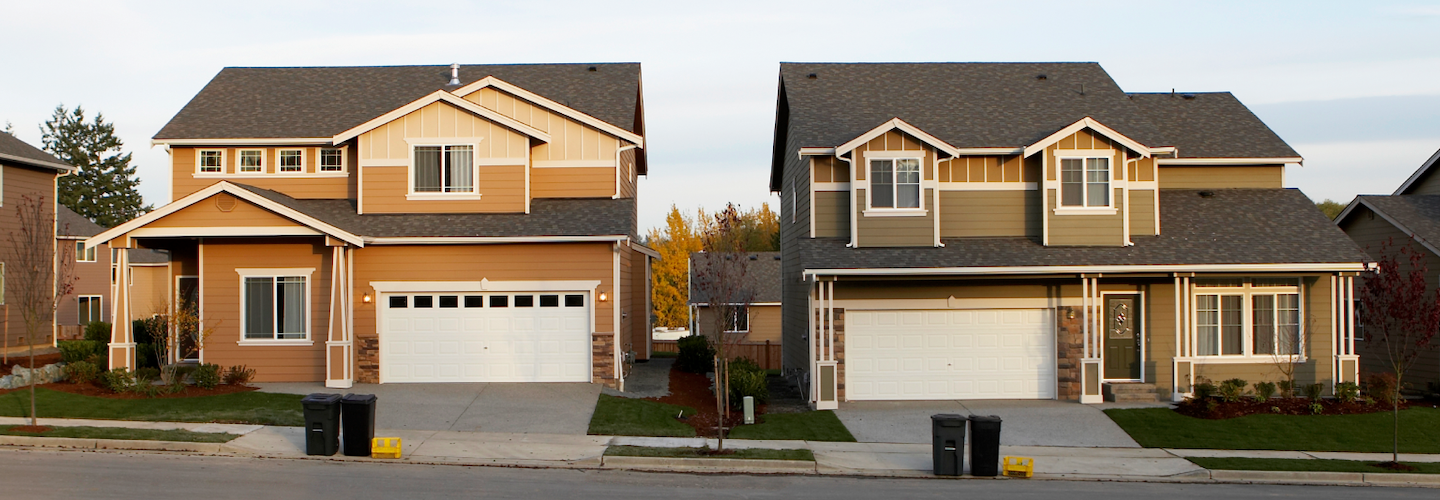
How Many Miles Per Gallon Does Your Home Get?

I'm not sure if you heard or not, but this week, the federal government announced a major policy change that will most likely affect every American.

Don't worry, I'm not talking about the health care overhaul - I'll let others debate the merits of that. What I am talking about is the new Housing and Transportation Affordability Index.

Here's the low-down: it used to be that the standard measure of affordability was that housing costs should be no more than 30% of your paycheck. The new standards add in transportation costs - now, the affordability is that less than 45% of your paycheck should go towards housing costs plus transportation costs. This makes sense as, the farther out you go from a metro area, you generally spend less on housing, but more on transportation.

No big deal, right? After all, we have cheap gas and parking is free at just about every Target. But the numbers say otherwise. Using the 30% metric, about 70% of all US housing was "affordable". When you factor in transportation costs and increase the threshold to 45%, the percentage of affordable housing drastically dwindles down to 39%.

The report was done by Center for Neighborhood Technology (CNT) and was discussed this last Tuesday with deputy HUD secretary Ron Sims. Sims observed that knowing transportation costs as well as housing costs would have lessened the amount of defaulted mortgages because homeowners, he said, "did not realize they had a transportation cost burden and a mortgage."

Another goal of the report: enact legislation requiring real estate agents, brokers, and landlords to dislcose the neighborhood transportation costs when marketing a property.

What do you think? Should transportation costs be incorporated into housing costs? Should potential buyers have access to that information?

(Image source: CNT)
Comments:

Oh, for cryin' out loud...once again the government steps in to tell the American people what an injustice it is that we struggle to finance our extravagant lifestyles. The largest component of "transportation costs" used in this study is "annual auto ownership cost." Sure, spending $10k/yr on your car (including depreciation, manitenance, insurance, registration, etc.--but NOT gas) is going to gobble up a significant percentage of most American incomes--but where is it written that we have to spend that much? I'm happy as a pig in mud with my 2003 Toyota Echo (close to 40 mpg!), for which I paid $4k two years ago and less than $2k in other "ownership costs" since then. You'll have to forgive me if I fail to wring my hands over the plight of an outer-ring suburbanite who struggles to finance his 40 minute commute from his $350k house to his place of work in his $60k SUV. Then again, maybe I shouldn't be so unsympathetic--after all, isn't "keeping up with the Joneses" a fundamental human right?

Posted by Steve on March 25, 2010 at 12:39 PM EDT #

This is dumb. While seemingly something useful, and in the buyer's interest, it would be highly speculative, and thus not very useful. Because of the variety in the mileage ratings of vehicles, the different number of vehicles used often by a particular household, the fluctuating (and sometimes volatile) price of fuel, and the varying distances to different individual's places of work, the realtor would have to use a set of predefined, generalized guidelines for each of these. Unless the buyer fits neatly into those generalized guidelines, the information will be useless as he/she/they will have to extrapolate.

Posted by Adam Shearer on March 25, 2010 at 07:22 PM EDT #

Steve, I couldn't agree more with your post. I have written before about America's penchant for "extravagant lifestyles" (see http://dotloop.blogspot.com/2010/01/is-2010-year-house-once-again-becomes.html and http://dotloop.blogspot.com/2010/01/small-homes-why-less-is-more.html) and agree that we need to reign in our excess. The reason I think this idea is a good one is because it puts a mirror up to the American people and forces us to see how much of our income is wasted on those "$60k SUVs" and unsustainable suburbs. Maybe if people realize that they are spending ridiculous amounts on driving, we can get some better transportation options and create sustainable and walkable communities. The "injustice" is not that people are paying more than they need to on transportation, it's that they don't care. Having the facts presented in black and white may make some reconsider buying that "350k house" faraway from where they need to go every day of the week and maybe buy a 40mpg car like yours. I think these new guidelines are just one more step in making people realize that their actions have consequences. Thanks for the post.

Posted by Nick Sweeney on May 07, 2010 at 12:53 PM EDT #

Post a Comment:
  • HTML Syntax: NOT allowed

Search

 
Home | Help | Terms of Use | Privacy Policy | Careers
Support: (513) 257-0551  Toll Free: (888) DOT-LOOP (368-5667)  
© 2010 The DotLoop Company